
When do you need an inspection?
- After a leak or flood, to find out what’s actually wet.
- When you see stains, bubbling paint or a musty smell but no obvious source.
- Before you rebuild, to confirm framing and subfloor are dry.
- When an insurer or landlord asks for documentation.
- When you’re buying or selling a house with a history of water problems.
What tools does an assessment use?
| Tool | What it does | Limit |
|---|---|---|
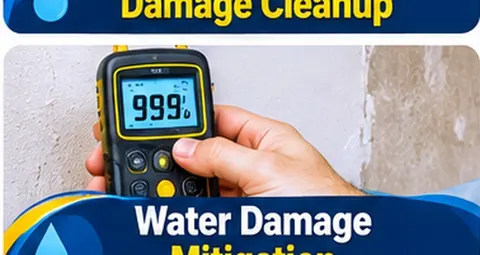
| Pin moisture meter | Probes into wood or drywall to read moisture content | Leaves small holes |
| Pinless meter | Scans a surface for moisture below it | Reads shallow depths |
| Thermal imaging camera | Shows temperature differences that can point to wet areas | A clue, not a moisture measurement |
| Hygrometer | Reads air temperature and relative humidity | Air only, not materials |
| Borescope | Small camera inspects inside cavities through a small hole | Limited view |
| Photos and moisture mapping | Records readings and locations on a sketch | Only as good as the person doing it |
What does the assessment decide?
- The source and whether it’s stopped.
- The water category: clean, gray or black. See the table on the home page.
- The class: how much water and how hard the materials are to dry.
- Which materials stay, dry in place or come out.
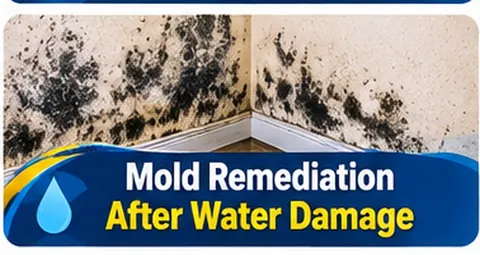
- Whether there are signs of mold, which a licensed assessor handles. See mold remediation after water damage.
- The scope of work, equipment and rough schedule.
What should the written report include?
- Photos of each affected area.
- A moisture map or list of readings with locations.
- Water category and class, and the reasoning.
- A scope of work with materials to remove and dry.
- Notes on hidden or inaccessible areas.
- The inspector’s name, company and license numbers where applicable.
Is an inspection different from a mold inspection?
Yes. A water damage inspection measures moisture and scopes drying. A mold assessment in New York is a regulated activity for projects over 10 square feet and must be done by a licensed mold assessor, who can’t also be the remediator on the same project. Don’t assume one visit covers both.
How do you find a leak you can’t see?
By following the moisture. A stain on a ceiling is often not under the leak, because water travels along framing and pipes. Inspectors trace readings back to the source, sometimes with thermal imaging and a camera inspection. If the leak is a pipe, a licensed plumber confirms and repairs it. Hidden leaks in walls and floors are common in older homes with aging supply lines.
Why get an assessment before you rebuild?
Because a rebuild over wet framing is expensive to redo. Final readings tell you whether it’s safe to close walls. It’s also useful for insurance, since an assessment documents the loss. See water damage mitigation and water damage repair.
Does the inspection cost money?
Providers set their own policies. Some assessments are free as part of a job; some are charged separately, especially if the assessment is standalone or for documentation only. Ask whether the assessment is free, billed or credited if you hire them. We don’t quote prices.
What happens on inspection day?
Expect a walk-through with questions first: when it happened, what the source was, what’s been done. Then readings: the inspector checks dry reference spots, then works toward the wet areas, marking readings on a sketch or photos. They look at the ceiling below, the wall behind, the cabinet base and the subfloor edges. It’s a few hours in a typical home, longer in a big or multi-unit property. Leave the area as it is so the readings are accurate, and tell them about anything you’ve already moved or dried.
How does an assessment help if there’s a dispute?
It gives you dated, measured facts. If a landlord says the leak wasn’t their problem, or an insurer questions the scope, photos and readings that show the source, the extent and when it was found carry more weight than a description. Keep the report with your claim records and send copies, not originals.
Where do assessments help most in Richmond Hill?
In older homes where hidden moisture is likely, such as the wood-frame houses of North Richmond Hill, and in mixed-use buildings along Liberty and Atlantic avenues where water in one unit can show up in another. Basements that have flooded more than once are another good candidate.
For water damage restoration that starts with a clear scope, call (929) 219-1202. Once you know what’s wet, drying is covered on structural drying services.
Related services

Not sure how far it went?
Call Now to be connected with an independent provider that does water damage assessments in Richmond Hill.
Frequently asked questions
How do you find hidden water damage?
With moisture meters, thermal imaging and sometimes a borescope, tracing readings to the source.
Is a thermal camera enough?
No. It points to wet areas; meters measure moisture.
Can I get a written report for my insurer?
Ask the provider. Photos, moisture readings and a scope are the usual contents.
Is a water inspection the same as a mold test?
No. In New York, mold assessment is a separate licensed activity for jobs over 10 square feet.
Last reviewed November 8, 2026. General guidance only, not legal, insurance or engineering advice.