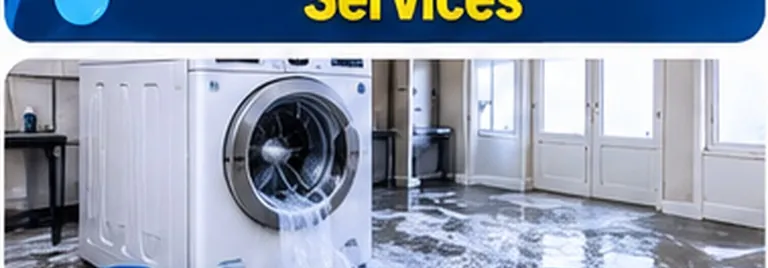
What usually fails on a washing machine?
| Failure | Why it’s fast | What to check |
|---|---|---|
| Burst supply hose | Full household pressure behind it, running until someone shuts it off | Braided hose age; shutoff valves |
| Drain standpipe overflow | The washer pumps out faster than the standpipe can drain | Clog in the standpipe or trap |
| Overfilled or stuck valve | Machine keeps filling | Inlet valve and water level sensor |
| Door gasket or pump leak | Slow, then sudden | Water pooling under the machine |
What do you do first?
- Shut off the water. Close the hot and cold valves behind the washer. If they’re stuck, shut the main.
- Unplug the machine. Only if you can reach the plug from a dry spot. If water is near the outlet, call Con Edison or an electrician.
- Check below. A washer on an upper floor or over a cellar can drip into ceilings. Tell downstairs neighbors.
- Pull the water up. Use towels and a wet vac for small amounts. Don’t drag a heavy washer across wet flooring.
- Photograph and call. Document, then call (929) 219-1202.
Is washing machine water clean?
At first, supply-line water is clean, but washer drain water is gray: soap, lint, body soils. And clean water that’s been sitting in a basement laundry area for a day isn’t clean anymore. The longer it sits, the more it behaves like contaminated water. Treat drain overflow as gray and anything older than a day as suspect.
Why do Queens laundry areas get hit hard?
Many homes keep the washer in the cellar, near the floor drain, the water heater and the boiler, which means water meets a lot of vulnerable equipment. In apartment buildings it’s often a closet unit above someone else’s kitchen. In either case, the machine’s location decides how far the water travels and who else is affected.
What does cleanup involve?
- Extraction from the floor and from under and behind the washer and dryer.
- Moisture mapping behind baseboards and in adjacent walls.
- Removal of wet baseboards, and wall bottoms where water wicked.
- Drying with air movers and a dehumidifier, with readings.
- Cleaning and, for gray water, sanitizing the affected surfaces.
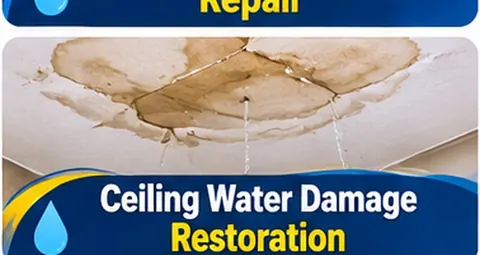
- Checking the ceiling below if the laundry is above living space.
Floors matter: laminate and engineered wood swell fast, vinyl can trap water underneath, and tile’s fine on top but the subfloor may be wet. Drying is covered in more detail on structural drying services.
How do you keep it from happening again?
- Replace rubber washer hoses with braided stainless hoses, and replace them periodically. Check the manufacturer’s guidance.
- Turn the supply valves off when you’re away for more than a few days.
- Don’t run the washer when nobody’s home.
- Keep a leak sensor on the floor near the machine.
- Clear the standpipe and trap so the washer can drain.
Does insurance cover a washer overflow?
A sudden appliance failure that floods a house is often treated as covered damage, but the appliance itself usually isn’t. Slow leaks are commonly excluded. Read your policy and call the insurer. See water damage mitigation for documentation.
How much does cleanup cost?
We don’t quote prices. It depends on how much floor and wall got wet, whether it reached the level below, equipment days and timing. A small, caught-fast spill is a smaller job than a hose that ran all afternoon. Get a written estimate.
For water damage restoration for Richmond Hill homes after a washer failure, call (929) 219-1202. A hose that burst is the same kind of event as a supply line break; see burst pipe water damage cleanup.
Related services


Washer flooded the floor?
Call Now to be connected with an independent provider in Richmond Hill.
Frequently asked questions
Is water from a washing machine considered contaminated?
Drain water is gray, with soap and soils, and clean supply water can become suspect if it sits. Cleanup should reflect that.
How long do braided washer hoses last?
They don’t last forever. Check the manufacturer’s guidance and replace hoses periodically, and inspect them for bulges or corrosion.
Can I save my laminate floor?
Laminate swells quickly when water gets underneath. If it’s been wet for hours, replacement is common, but fast drying can sometimes help.
Will insurance pay for the washer?
The appliance itself usually isn’t covered, but resulting water damage often is for sudden failures. Check your policy.
Last reviewed November 8, 2026. General guidance only, not legal, insurance or engineering advice.