
Can wet drywall be saved?
| Situation | Usually | Why |
|---|---|---|
| Clean water, caught within a day, firm board | Can often be dried in place | Gypsum hasn’t lost strength; paper facing hasn’t started to grow mold |
| Soft, crumbling or sagging board | Replace | Gypsum has broken down |
| Contaminated water (sewage or floodwater) | Replace | Porous material can’t be reliably disinfected |
| Wet for more than a day or two | Often replace | Mold risk on the paper facing and behind the board |
| Ceiling drywall holding water | Relieve, then often replace | Weight and sag |
What is a flood cut?
A flood cut is cutting the wall horizontally above the visible water line so the wet material and insulation behind it can come out. Drywall wicks, so it’s wet higher than it looks, and crews commonly cut some distance above the line, then confirm with a moisture meter. Cutting too low leaves wet board behind the paint.
Why can’t you see the real damage?
Because the paper facing hides what’s going on. Water travels up the board and behind it into insulation and the bottom plate of the wall. The board can look fine on a Tuesday and be soft by Friday. That’s why a moisture reading, not your eyes, decides how much comes out. See water damage inspection and assessment.
How is wet drywall repaired?
- Confirm the source is fixed. No point finishing a wall that’s going to get wet again.
- Remove wet drywall, trim and insulation. Cut to dry material, with straight lines so the patch is simple.
- Dry the cavity. Studs and bottom plate have to read dry. See structural drying services.
- Hang new board. Moisture-resistant board is common in damp areas.
- Tape, mud and sand. Several coats, with drying time between them.
- Prime and paint. Match sheen and color across the whole wall to hide the patch.
Why does drywall grow mold so easily?
Gypsum board has a paper facing, and paper is food for mold. Once the board stays damp past a day or two, growth can start on the back of the paper where you can’t see it, and then the wall smells before it shows. That’s why crews test behind the surface and don’t go by color. The insulation inside the wall is the other half of the problem: it holds water against the studs long after the board looks dry.
What happens to baseboards and trim?
Baseboards sit at the bottom of the wall, so they take the first hit and wick water into the wall behind them. Crews pull them early to let the cavity breathe. Paint-grade trim can usually be reused if it’s dry and straight, and stained or older profiles are worth saving carefully, especially in older homes where matching a profile is hard. Don’t nail trim back on until the readings clear.
What about plaster walls?
Older houses may have plaster over wood lath. Wet plaster can soften, bulge and delaminate from the lath. Repair is often a patch or skim coat rather than drywall, and it takes a plasterer’s skill. Don’t assume a modern drywall repair approach applies. This is common in older North Richmond Hill homes.
What does drywall repair cost?
We don’t quote prices. The cost depends on how much board comes out, whether insulation and trim are replaced, the number of coats, paint matching and ceiling work. Smaller repairs have a minimum because of mobilization and drying time between coats. Ask for a line-item estimate.
Do you need a licensed contractor to repair drywall in NYC?
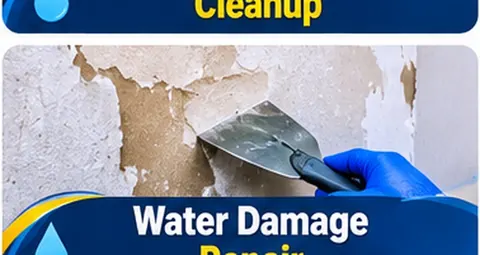
For residential repair work over $200, New York City requires a Home Improvement Contractor license from the Department of Consumer and Worker Protection. Ask for the number and verify it. Details are on water damage repair.
Is mold behind the drywall a problem?
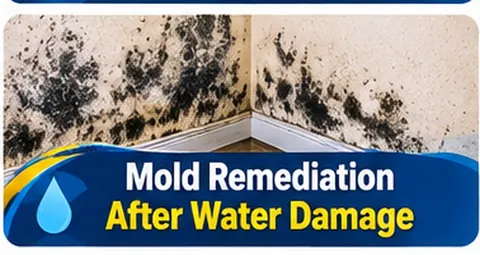
It can be. If you find growth when you open a wall and it covers more than 10 square feet, New York’s mold licensing rules apply to the cleanup. See mold remediation after water damage. Don’t scrub or sand it first; that spreads spores.
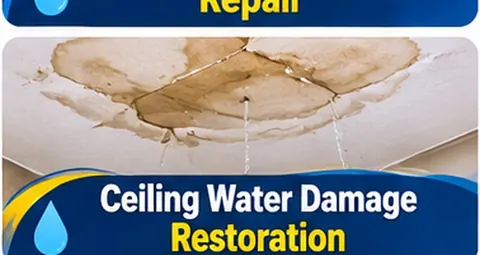
For water damage restoration across Richmond Hill that includes drywall repair, call (929) 219-1202. Ceilings are their own problem; see ceiling water damage restoration.
Related services
Walls soft or stained?
Call Now to be connected with an independent provider in Richmond Hill.
Frequently asked questions
How high does water wick up drywall?
Higher than you can see. Crews commonly cut above the visible line and confirm with a moisture meter.
Can I just paint over water-stained drywall?
Not while it’s damp. Fix the source, dry the wall and use a stain-blocking primer. If the board is soft, replace it.
How long does drywall repair take?
Cutting and hanging can be quick, but taping and finishing need drying time between coats, so plan on several days after the wall is dry.
Is moisture-resistant drywall waterproof?
No. It resists moisture better, but it isn’t flood-proof.
Last reviewed November 8, 2026. General guidance only, not legal, insurance or engineering advice.