
What did the 2026 storm season look like in Richmond Hill?
- May 20, 2026: heavy rain with hourly rates of 1.5 to 2 inches in parts of Queens, and reported sewer backups in Kew Gardens and Richmond Hill.
- August 20, 2026: a second round of backups reported by the same residents, per the Queens Chronicle.
- Summer 2026: flash flood warnings, with city officials urging basement-apartment residents to keep emergency bags packed.
- September 25 to 27, 2026: a nor’easter. One Kew Gardens resident told the Chronicle that a check valve he’d installed after August protected his basement.
That’s three different kinds of weather and three different ways water got in. A storm doesn’t have one failure mode, so storm damage work starts with figuring out the entry point.
Where does storm water get in?
| Entry point | Signs | Usually affects |
|---|---|---|
| Roof and flashing | Stains on upper ceilings, drips in the attic, dark insulation | Attic, top-floor ceilings, walls below |
| Wind-driven rain at windows and doors | Wet sills, staining below frames, swollen trim | Walls, flooring near the opening |
| Gutters and downspouts | Overflow at the roofline, water pooling at the foundation | Walls, basement, soil next to foundation |
| Window wells and hatchways | Water in the well, wet basement wall below | Basement |
| Foundation cracks and joints | Seepage after long rain | Basement walls and floor |
| Sewer backup | Water from drains and toilets | Basement. See sewage and sewer backup cleanup |
What do you do right after a storm?
- Make it safe. Stay out of rooms with ceiling sag or standing water near electrical equipment. Con Edison handles electric emergencies in Queens.
- Stop more water. If the roof is open, a provider may tarp it. Don’t go on a wet roof yourself.
- Photograph everything. Damage, the entry point and the date. Storm claims depend on documentation.
- Report what’s public. Call 311 for street flooding or sewer backups that aren’t caused by your plumbing.
- Call for drying. Call (929) 219-1202. Storm water that soaks insulation and drywall needs removal and drying fast.
How is storm water damage different from a flood?
Rain that comes through the roof or around a window is generally cleaner than floodwater that came in from the street, though attic insulation and old roofing debris still foul it. Street water is covered separately on emergency flood cleanup. This page is for water that came from above or around the envelope.
What happens to attic and ceiling water?
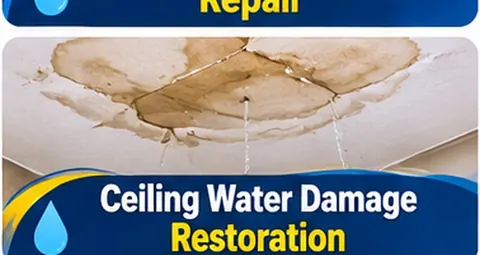
Water that enters at the roof soaks insulation first, then drywall or plaster below. Wet attic insulation holds water against framing for days. The usual sequence is to find and stop the entry point, remove wet insulation, dry framing and ceilings, and then repair. If the ceiling’s already stained or sagging, see ceiling water damage restoration.
Does insurance cover storm damage?
It depends on what damaged the building. Wind and storm damage to the roof that lets rain in is often covered under a standard policy, subject to the deductible. Rising water from outside is flood, which usually isn’t, and sewer backup often needs its own endorsement. NYC guidance notes NFIP flood coverage generally takes effect 30 days after purchase. Call your insurer, and see water damage mitigation for documentation.
How do you prepare for the next storm?
- Clear gutters, downspouts and catch basin grates near your home. Report clogged basins to 311.
- Make sure downspouts discharge away from the foundation.
- Check roof flashing and caulking around windows and doors before the season.
- Ask a licensed plumber about a backwater valve. The DEP recommends considering one.
- Test your sump pump and consider a battery backup.
- Move valuables off the cellar floor and consider a water sensor.
- Read the DEP’s free guide at rainfallready.nyc.
What does storm damage restoration cost?
We don’t quote prices. It follows the number of rooms affected, how much insulation, drywall and flooring has to come out, drying time, and whether roof or exterior repairs are part of the scope. Ask for a written estimate that separates emergency work from repairs.
If you need professional water damage restoration after a storm, call (929) 219-1202. North Richmond Hill’s older roofs and porches take a beating in wind-driven rain, and cellars across both ZIP codes are the other half of the story.
Related services


Storm water in your home?
Call Now to be connected with an independent storm damage provider in Richmond Hill.
Sources and further reading
- NYC DEP: Flooding and climate change
- Queens Chronicle: Sewer backup blues in Kew Gardens, RH
- PIX11: Summer flash flooding sparks concerns in Queens
Frequently asked questions
Is wind-driven rain damage covered by insurance?
Often when the wind or storm first damaged the roof or building, but it depends on your policy and deductible. Ask your insurer which category your loss falls into.
How much rain can NYC sewers handle?
The DEP says city sewers are built for roughly 1.5 to 1.75 inches of rain per hour.
Should I tarp my own roof?
Don’t go on a wet roof. A provider can tarp it safely, and you should document the damage first.
How soon should wet attic insulation come out?
Quickly. Wet insulation holds water against framing. Call as soon as you see staining or dripping.
Last reviewed November 8, 2026. General guidance only, not legal, insurance or engineering advice.