When does it count as an emergency?
If water is moving, rising or spreading, it’s an emergency. So is any amount of standing water on carpet, hardwood or a finished floor, and any water that’s coming through a ceiling. A one-inch spill on tile you can mop. A one-inch spill on a floor with padding underneath is already inside the floor.
- Water you can’t stop, or can’t find the source of.
- Anything from a toilet, floor drain or sewer line. That’s a contamination problem, see sewage and sewer backup cleanup.
- Water in more than one room, or on more than one floor.
- Wet carpet, padding, drywall or insulation.
- Standing water near the electrical panel, outlets or a boiler.
What does water extraction look like on site?
The crew checks for electrical hazards first and shuts off power to the affected area if it’s safe to do so. Then the water comes out, biggest volume first.
| Method | What it is | Typical use |
|---|---|---|
| Submersible or trash pump | A pump set in the water that discharges through a hose | Several inches or more of standing water, such as a flooded basement |
| Truck-mounted extractor | Powerful vacuum on a vehicle, with long hoses run into the building | Large areas and carpet extraction without hauling equipment in |
| Portable extractor | Wand-type machine carried in | Rooms, stairs and areas trucks can’t reach |
| Squeegee and wet vacuum | Hand tools for the last film of water | Hard floors, thresholds, tight corners |
Carpet and padding get special treatment. Water in padding is trapped under the carpet, and a good crew either extracts through the carpet with a weighted tool or lifts and removes the pad. If the water was contaminated, both usually go in the trash.
What do you do while you wait for the crew?
- Stay safe. Don’t stand in water near outlets, appliances or the panel. If the panel is wet, call Con Edison or an electrician. If you smell gas, leave and call 911 and National Grid.
- Stop the source if you can. A burst pipe has a shutoff. A sewer backup doesn’t.
- Document. Photos and video of the water level, the source and the damaged items before anything moves.
- Lift what you can. Furniture legs, boxes, papers and electronics off the wet floor. Don’t move heavy furniture across wet carpet; it can damage the floor and your back.
- Open the path. Clear a way from the water to the door, and tell the crew where parking is. In a walk-up, tell them which floor and whether the elevator works.
How is extraction different from drying?
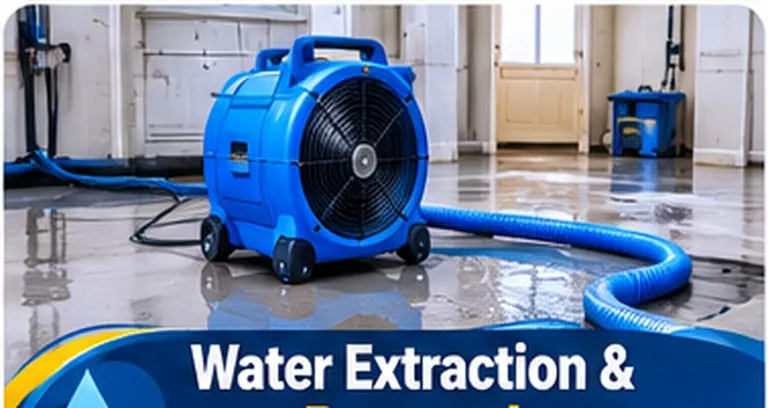
Extraction removes liquid water. Drying removes the moisture that’s already inside wood, plaster and concrete, and that takes equipment and days. A building that’s been extracted can look fine and still be wet inside the walls. The crew that extracts should hand off to proper drying with readings, which is covered in structural drying services.
Emergency removal in older Queens buildings
A lot of Richmond Hill houses are old wood-frame construction with plaster or lath walls and original floors. Water spreads along framing and settles under old flooring, so removal in those homes needs more attention to what’s under the surface. In attached homes and apartment buildings, tell the super right away; water that’s on your floor is probably in someone else’s ceiling. See burst pipe water damage cleanup for how that spreads.
How much does emergency water removal cost?
We don’t quote prices, and no honest provider can without seeing the water. The things that move the number are depth and square footage, whether the water is contaminated, whether the crew has to remove carpet, pad or drywall, and whether the call is overnight or on a holiday. Ask for a written scope that separates extraction from drying and from demolition.
Where we get calls from
Emergency water calls come from both ZIP codes, from North Richmond Hill near Park Lane South and Jamaica Avenue to South Richmond Hill along Liberty and Atlantic avenues. When you call (929) 219-1202, give the cross streets and we’ll tell you what we need next.
If you want water damage restoration in Richmond Hill, NY that goes beyond the first pump-out, the home page explains how our referral line connects you with independent providers and how to check them. Or call Richmond Hill Water Damage Pros directly.
Related services


Standing water right now?
Call Now to be connected with an independent provider that does emergency water removal in Richmond Hill.
Frequently asked questions
How fast can a crew get to Richmond Hill?
It depends on the provider, the time of day and where they’re coming from. We can’t promise an arrival time. When you call, tell us the cross streets and whether the water is rising, and we’ll connect you with an available provider.
Can I use a wet vac myself?
For a small clean-water spill, yes. Don’t use one if water is near electrical outlets, if the water could be sewage, or if there’s more than a few gallons. Household wet vacs don’t pull water out of carpet padding or framing.
Do I need to remove the carpet?
Often the padding has to come out, and carpet too if the water was contaminated or sat for a day or more. The crew decides on site after checking moisture.
Is water removal the same as water damage restoration?
No. Removal is the first step. Restoration also covers drying, cleaning, documentation and repair. See water damage mitigation for how those phases fit together.
Last reviewed November 8, 2026. General guidance only, not legal, insurance or engineering advice.